

Enterprise T-Series
A single-phase online UPS with a built-in isolation transformer, made for demanding mixed loads such as motors, imaging machines and lab equipment.
- Range
- 5–20 kVA
- Configuration
- Single-phase output · 15 kVA @ 240 VDC and 20 kVA @ 360 VDC use a 3:1 input
- Topology
- Low-frequency transformer-based · true double-conversion online · inbuilt output isolation transformer
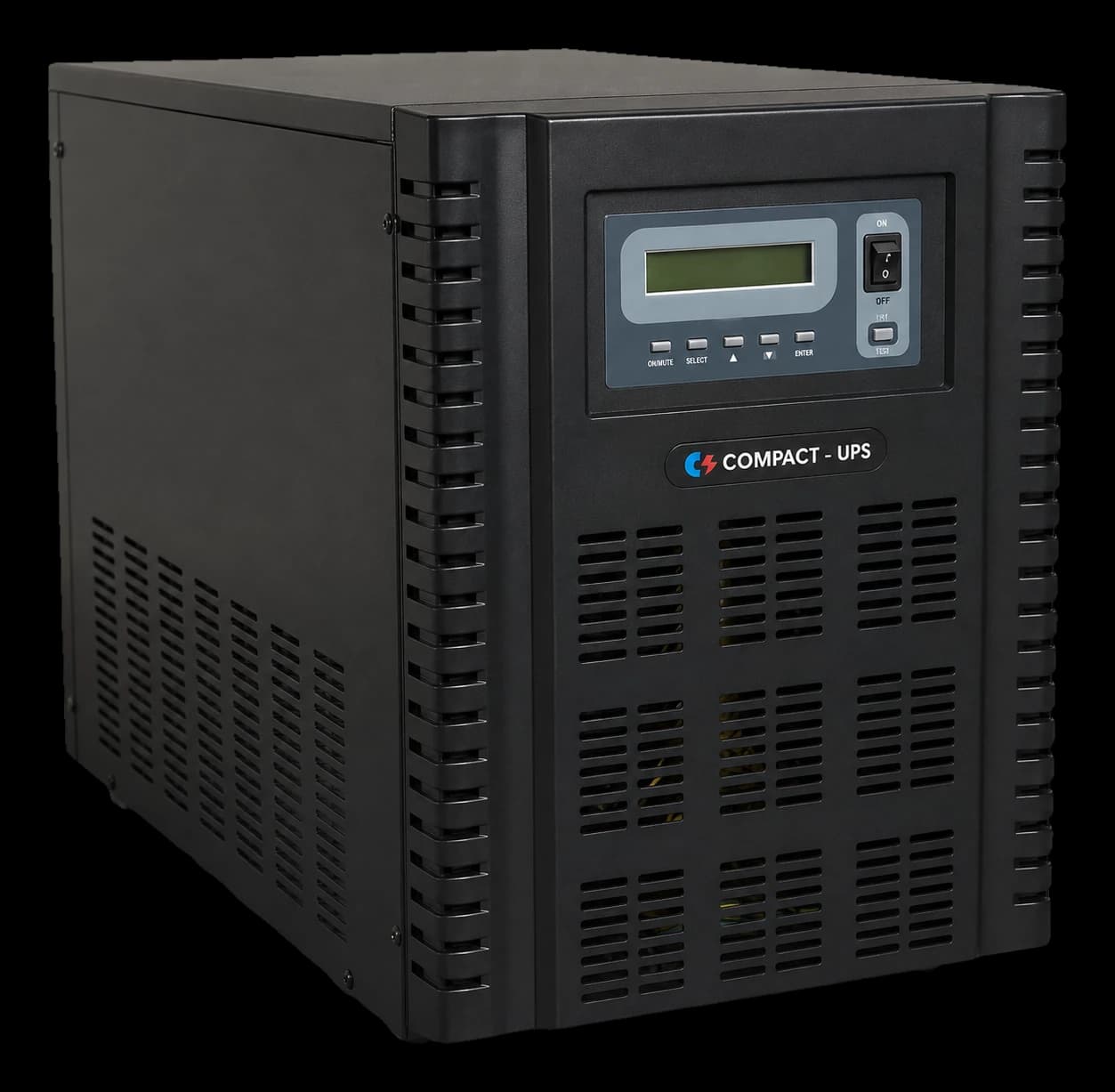
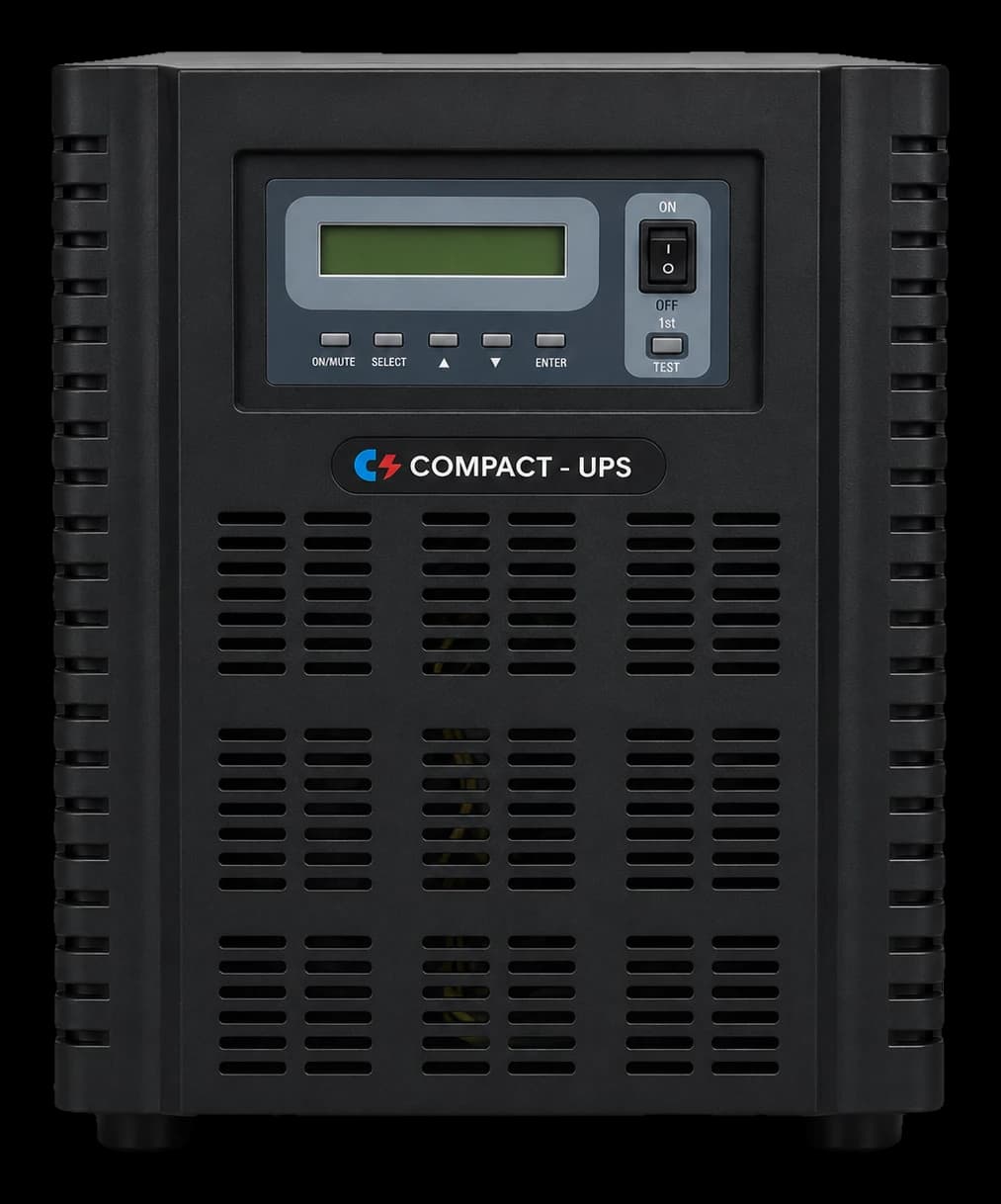
What it is
The Enterprise T-Series is a transformer-based, true double-conversion online UPS with an inbuilt output isolation transformer. That transformer is a physical barrier between a volatile input and a sensitive, expensive load.
There is a long-running debate between transformerless UPS, transformer-based UPS, and transformerless UPS with an external isolation transformer. COMPACT's position: for mixed loads — resistive, inductive and capacitive together — a true transformer-based topology gives the higher MTBF and the load-handling that matter once a system is deployed for two to three years.
What it does
Inbuilt output isolation transformer
Galvanic separation of load from input, built in — not a bolt-on external transformer.
True mixed-load support
Handles resistive, inductive and capacitive loads together, including motor and inductive loads.
Low output distortion
THDv below 3% on linear load; pure sine wave output.
Long backup, inbuilt charger
High-rated inbuilt charger supports 2–10 hours of battery backup; charging to 95% in under 10 hours.
Cold / DC start
Starts from battery with no mains present.
Higher MTBF topology
A refined, lower-component-count transformer-based design with substantially higher mean time between failures than transformerless alternatives.
The engineering value
Efficiency vs reliability — a deliberate trade
Transformerless UPS offers better efficiency, a smaller footprint and lighter weight. Its disadvantage is a higher service-call rate because of very sensitive electronics. The T-Series accepts a lower efficiency ceiling (up to 93%) to buy a substantially higher MTBF.
An external transformer is not a substitute
A transformerless UPS with an external isolation transformer protects against input volatility and helps with grounding, but the added cost does not make it a wiser option than a true transformer-based design.
Proven only after deployment
Reliability can only be measured after a UPS has supported its real load for two to three years. For mixed loads — even low-wattage ones — COMPACT's conclusion is to choose transformer-based.
Where it fits
Typical applications for this range — not an exhaustive list.
- Motor-based and inductive-load applications
- Rice Sortex and colour-sorting machines
- Photographic / photo-colour-lab printing machines
- Robotic and wood-carving machines
- Hospital operating theatres and CT-scan consoles
- Pharma testing-lab equipment and industrial X-ray
- Cinema halls and large LED display / lighting
- Laser-cutting, UV and flex-machine loads
Transformer-based vs transformerless
A transformer-based online UPS regenerates the output and then passes it through an isolation transformer, giving galvanic separation and strong tolerance of mixed and inductive loads at the cost of size, weight and some efficiency.
A transformerless UPS drops the transformer for higher efficiency and a smaller footprint, relying on more sensitive power electronics. Compare the two below.
Transformer-based (T-Series, Enterprise Classic)
The regenerated output passes through an isolation transformer before the load — galvanic separation and strong tolerance of mixed and inductive loads.
- Mixed / inductive loads
- Strong
- MTBF
- Substantially higher
- Galvanic isolation
- Inbuilt
- Efficiency
- Up to ~93%
- Footprint & weight
- Larger, heavier
- Service-call rate
- Lower
Model line-up
Real model designations and capacities transcribed from COMPACT's catalogue.
| Capacity | Battery voltage | Dimensions W×D×H (mm) | Weight |
|---|---|---|---|
| 5 kVA | 192 V DC | 250 × 550 × 500 | ≈ 52 kg |
| 6 kVA | 192 V DC | 250 × 550 × 500 | ≈ 52 kg |
| 8 kVA | 192 V DC | 250 × 550 × 680 | ≈ 73 kg |
| 10 kVA | 192 V DC | 280 × 615 × 685 | ≈ 76 kg |
| 15 kVA | 240 V DC (3:1 input) | 280 × 615 × 685 | ≈ 117 kg |
| 20 kVA | 360 V DC (3:1 input) | 350 × 650 × 785 | ≈ 150 kg |
5 kVA
- Battery voltage
- 192 V DC
- Dimensions W×D×H (mm)
- 250 × 550 × 500
- Weight
- ≈ 52 kg
6 kVA
- Battery voltage
- 192 V DC
- Dimensions W×D×H (mm)
- 250 × 550 × 500
- Weight
- ≈ 52 kg
8 kVA
- Battery voltage
- 192 V DC
- Dimensions W×D×H (mm)
- 250 × 550 × 680
- Weight
- ≈ 73 kg
10 kVA
- Battery voltage
- 192 V DC
- Dimensions W×D×H (mm)
- 280 × 615 × 685
- Weight
- ≈ 76 kg
15 kVA
- Battery voltage
- 240 V DC (3:1 input)
- Dimensions W×D×H (mm)
- 280 × 615 × 685
- Weight
- ≈ 117 kg
20 kVA
- Battery voltage
- 360 V DC (3:1 input)
- Dimensions W×D×H (mm)
- 350 × 650 × 785
- Weight
- ≈ 150 kg
Battery voltage 192 V DC standard (168 V / 180 V DC optional). Dimensions and weights are transcribed from the catalogue table and are indicative; the sales team confirms exact per-model figures for a specific order.
Transformer-based vs transformerless online UPS
| Feature | Transformer-based (T-Series) | Transformerless |
|---|---|---|
| Mixed / inductive load handling | Strong — designed for resistive + inductive + capacitive together | Sensitive to inductive and non-linear loads |
| MTBF | Substantially higher | Lower — very sensitive electronics |
| Efficiency | Up to ~93% | Higher |
| Footprint & weight | Larger, heavier | Smaller, lighter |
| Galvanic isolation | Inbuilt output isolation transformer | Only with an added external transformer |
| Service-call rate | Lower | Higher |
Mixed / inductive load handling
- Transformer-based (T-Series)
- Strong — designed for resistive + inductive + capacitive together
- Transformerless
- Sensitive to inductive and non-linear loads
MTBF
- Transformer-based (T-Series)
- Substantially higher
- Transformerless
- Lower — very sensitive electronics
Efficiency
- Transformer-based (T-Series)
- Up to ~93%
- Transformerless
- Higher
Footprint & weight
- Transformer-based (T-Series)
- Larger, heavier
- Transformerless
- Smaller, lighter
Galvanic isolation
- Transformer-based (T-Series)
- Inbuilt output isolation transformer
- Transformerless
- Only with an added external transformer
Service-call rate
- Transformer-based (T-Series)
- Lower
- Transformerless
- Higher
Technical specification
Transcribed from COMPACT's product catalogue.
| Input | |
|---|---|
| Voltage range | 160 V – 280 V AC, single phase (3-wire, L + N + PE) |
| Frequency range | 50 Hz ± 10% |
| Output | |
| Power factor | 0.8 standard (0.9 optional) |
| Voltage | 220 / 230 / 240 V ± 1% (L + N + PE) |
| Frequency | 50 Hz ± 0.1% |
| Waveform | Pure sine wave |
| THDv | < 3% on linear load |
| Efficiency | Up to 93% |
| Overload | ≤ 125% for 10 min · ≥ 125% for 60 s · 150% for 1 s |
| Isolation transformer | Inbuilt |
| Battery | |
| Battery voltage | 192 V DC (168 V / 180 V DC optional); 15 kVA @ 240 VDC; 20 kVA @ 360 VDC |
| Charging current (max) | 1 A – 10 A standard (higher rating optional) |
| Charging time | < 10 hours to 95% |
| Display & protection | |
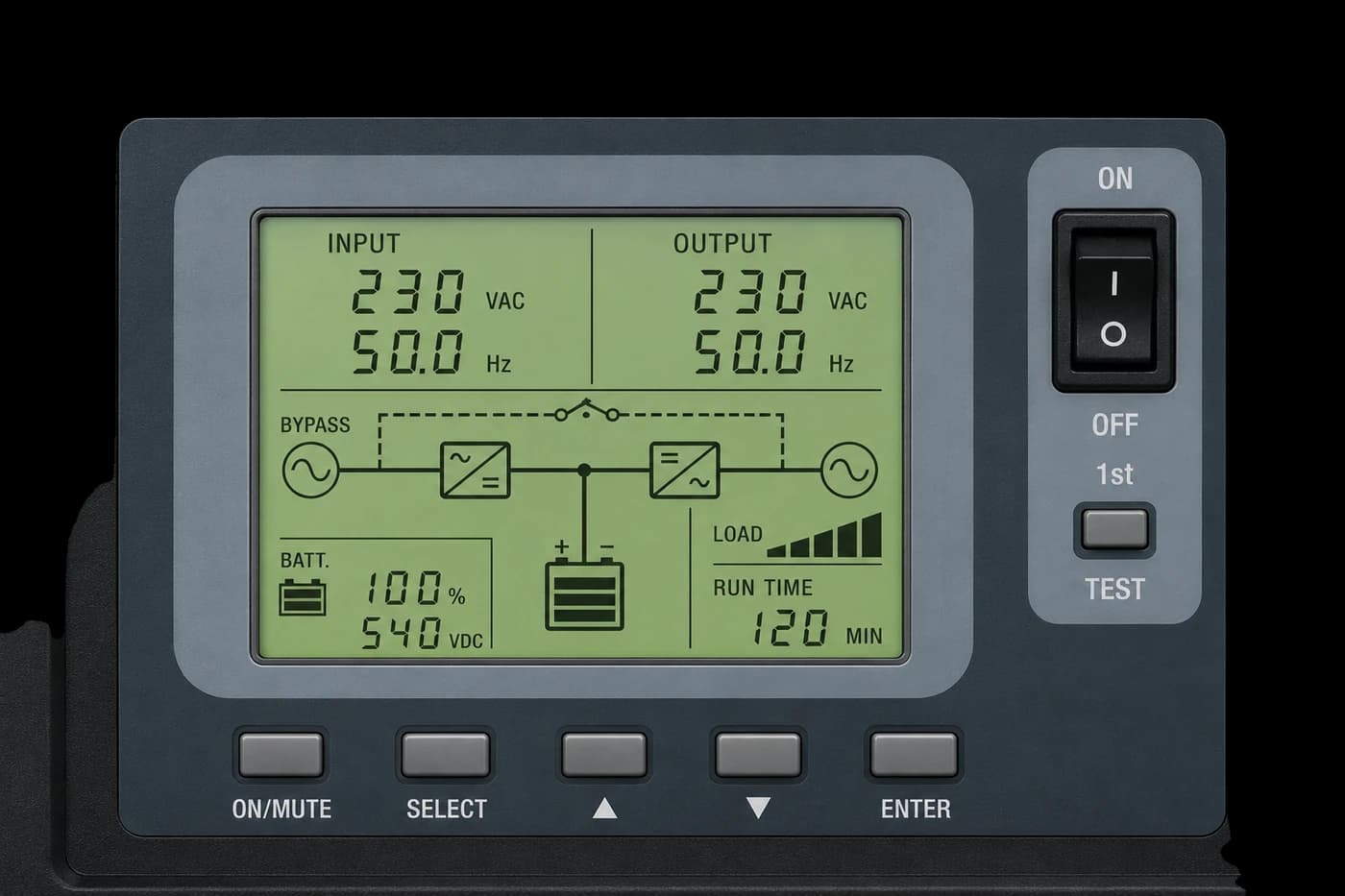
| LCD | Input/output voltage, input/output frequency, load & battery % |
| LED | Mains, AC mode, DC mode, low battery, overload |
| Alarms | Battery low voltage, abnormal power supply, UPS failure, overload |
| Protection | Battery low voltage, overload, short circuit, over-voltage |
| Environment | |
| Temperature | Operating 0–50 °C · Storage -10 °C to 55 °C |
| Humidity / altitude | 0–95% RH non-condensing / < 1500 m |
| Noise | Low audible noise level |
| Standards (as printed) | |
| Safety | IEC / EN 62040-1 |
| EMC | IEC / EN 62040-2, IEC / EN 62040-3, complying to CE |
Input
- Voltage range
- 160 V – 280 V AC, single phase (3-wire, L + N + PE)
- Frequency range
- 50 Hz ± 10%
Output
- Power factor
- 0.8 standard (0.9 optional)
- Voltage
- 220 / 230 / 240 V ± 1% (L + N + PE)
- Frequency
- 50 Hz ± 0.1%
- Waveform
- Pure sine wave
- THDv
- < 3% on linear load
- Efficiency
- Up to 93%
- Overload
- ≤ 125% for 10 min · ≥ 125% for 60 s · 150% for 1 s
- Isolation transformer
- Inbuilt
Battery
- Battery voltage
- 192 V DC (168 V / 180 V DC optional); 15 kVA @ 240 VDC; 20 kVA @ 360 VDC
- Charging current (max)
- 1 A – 10 A standard (higher rating optional)
- Charging time
- < 10 hours to 95%
Display & protection
- LCD
- Input/output voltage, input/output frequency, load & battery %
- LED
- Mains, AC mode, DC mode, low battery, overload
- Alarms
- Battery low voltage, abnormal power supply, UPS failure, overload
- Protection
- Battery low voltage, overload, short circuit, over-voltage
Environment
- Temperature
- Operating 0–50 °C · Storage -10 °C to 55 °C
- Humidity / altitude
- 0–95% RH non-condensing / < 1500 m
- Noise
- Low audible noise level
Standards (as printed)
- Safety
- IEC / EN 62040-1
- EMC
- IEC / EN 62040-2, IEC / EN 62040-3, complying to CE
Consider alongside
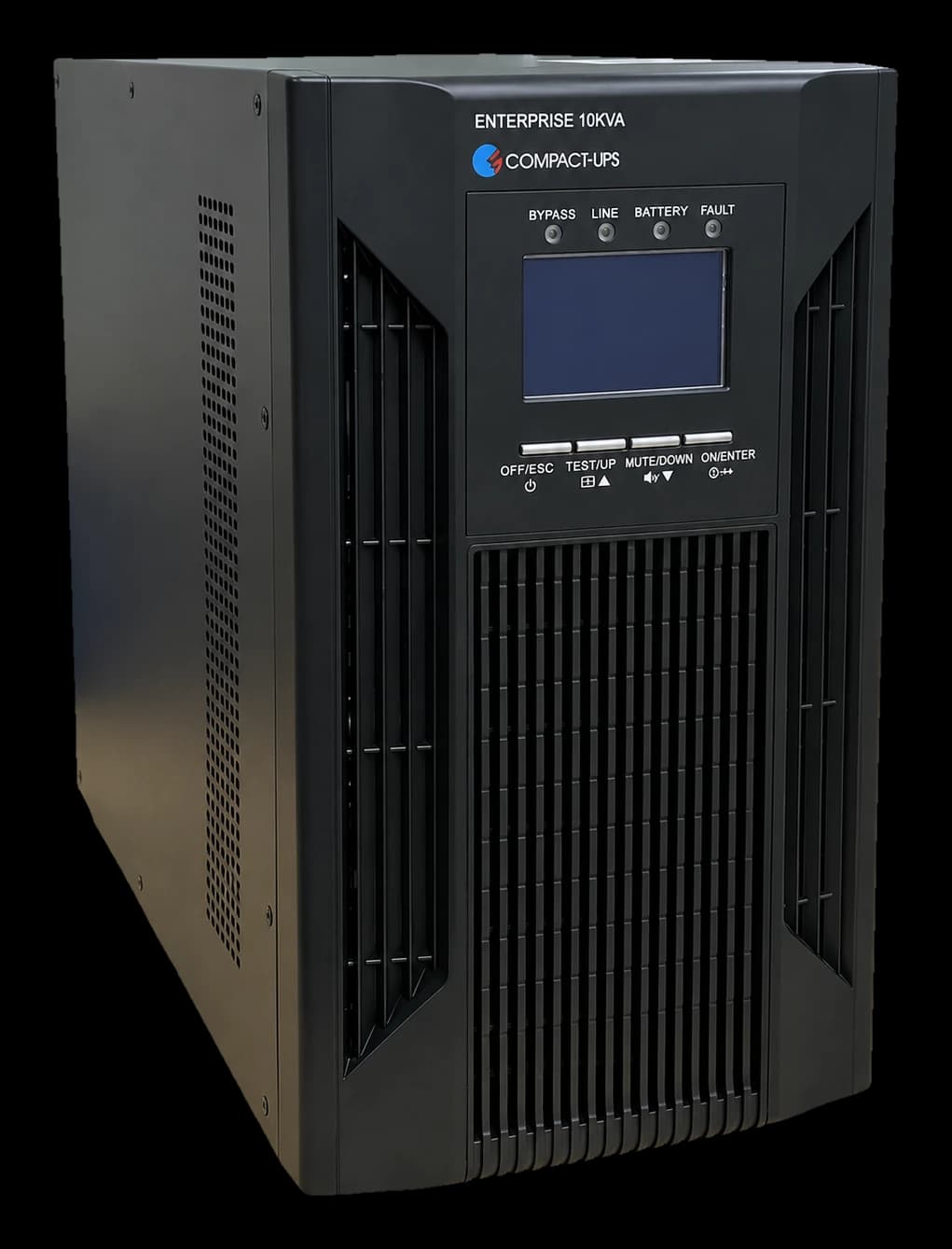 1–20 kVA
Enterprise Series
Intelligent true double-conversion online UPS for critical loads on unreliable power.
 Up to 300 kVA
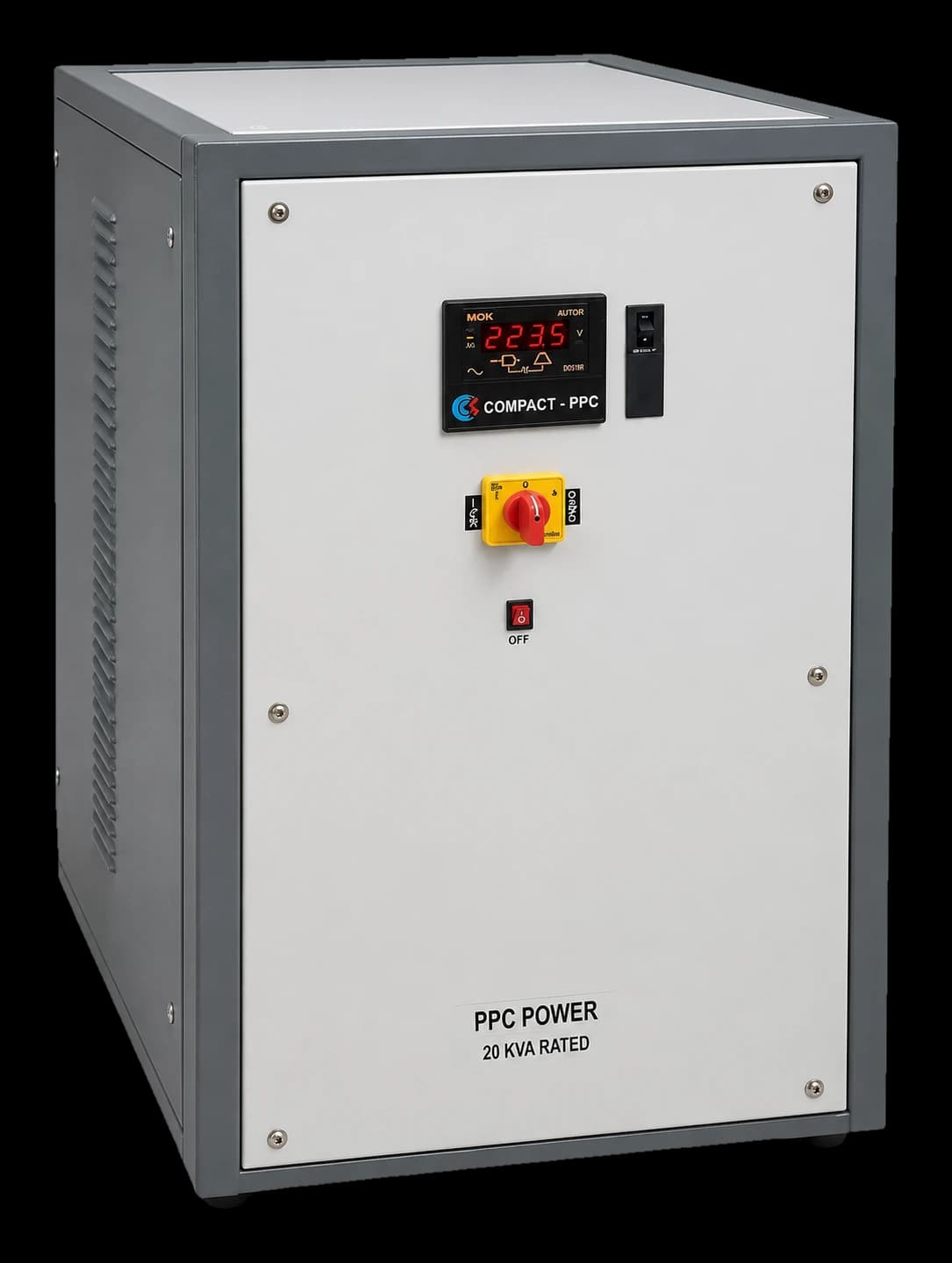
Precision Power Conditioner (PPC)
Solid-state precision voltage conditioning — no moving parts, correction in under 20 milliseconds.
 20–300 kVA
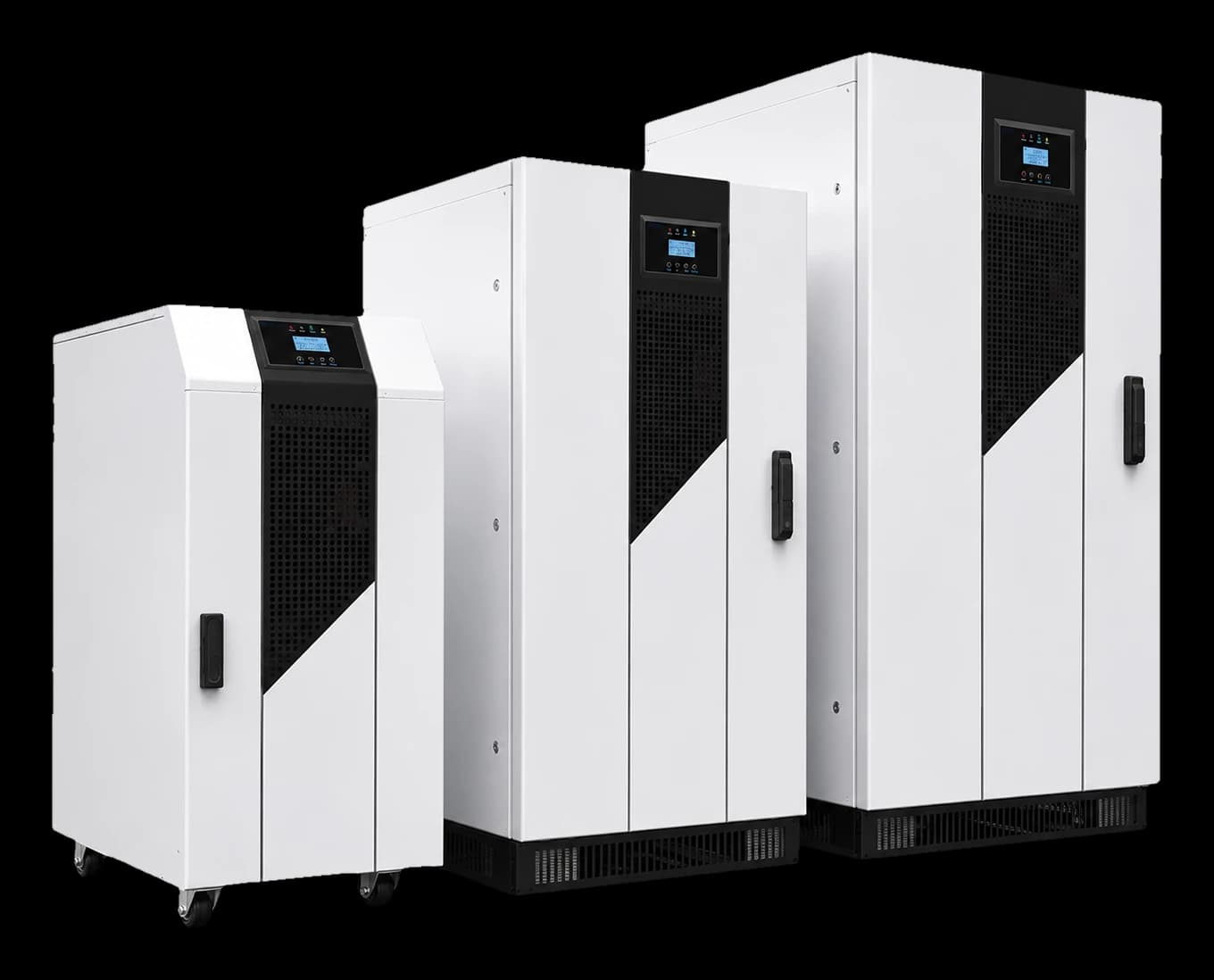
Enterprise Classic
Three-phase online double-conversion UPS, transformer-based with output galvanic isolation — 20–300 kVA.
Talk to us to uncover the hidden problems
Tell us the load, the site and the supply. COMPACT's pre-sales team will confirm whether T-Series is the right fit — and flag anything else the site needs that a spec sheet alone would miss.