

Enterprise Series
A single-phase online UPS for offices, labs and small server rooms — it cleans up unstable mains power and keeps equipment running through an outage.
- Range
- 1–20 kVA
- Configuration
- Single-phase output · 11–20 kVA models take a three-phase input
- Topology
- High-frequency IGBT · true double-conversion online
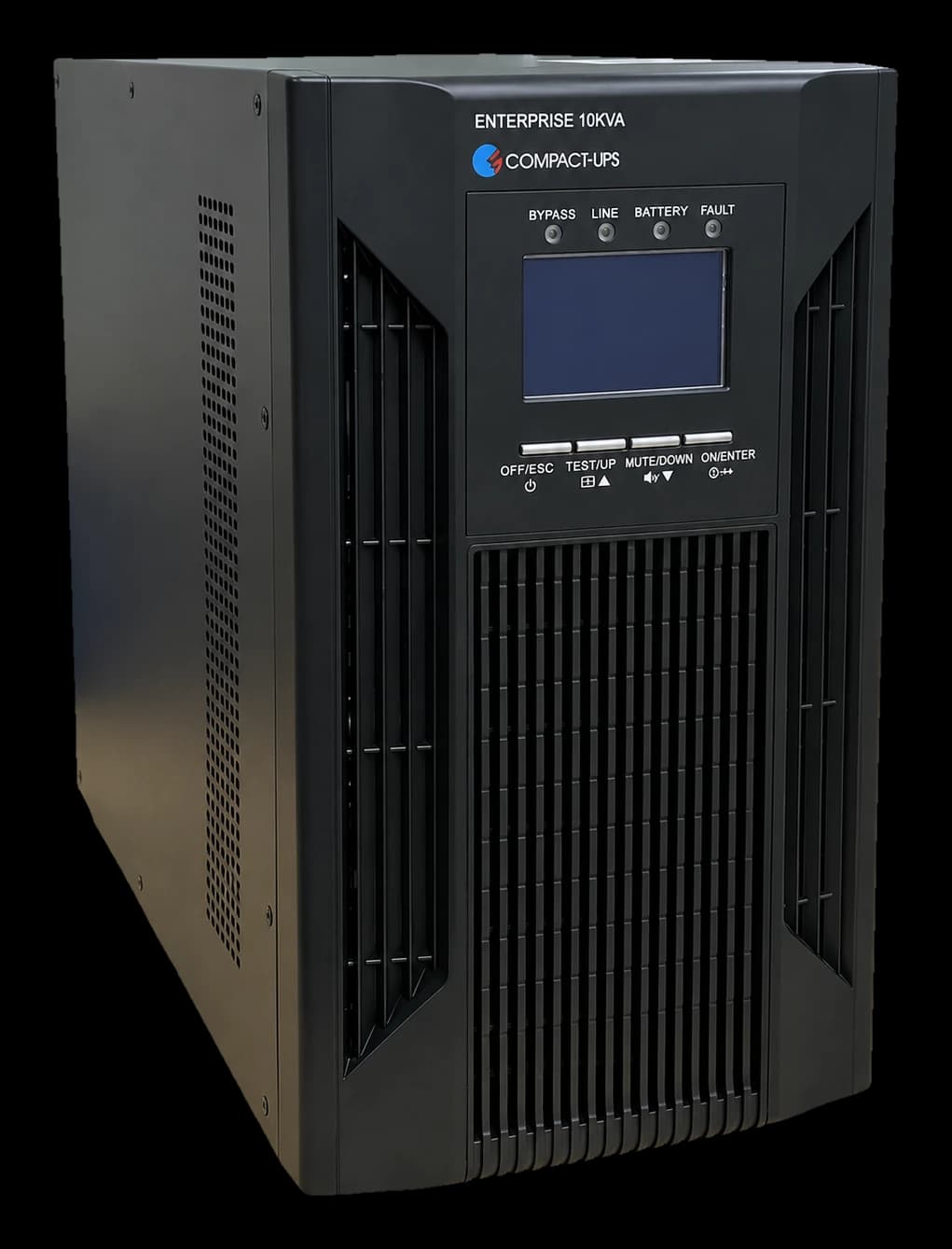
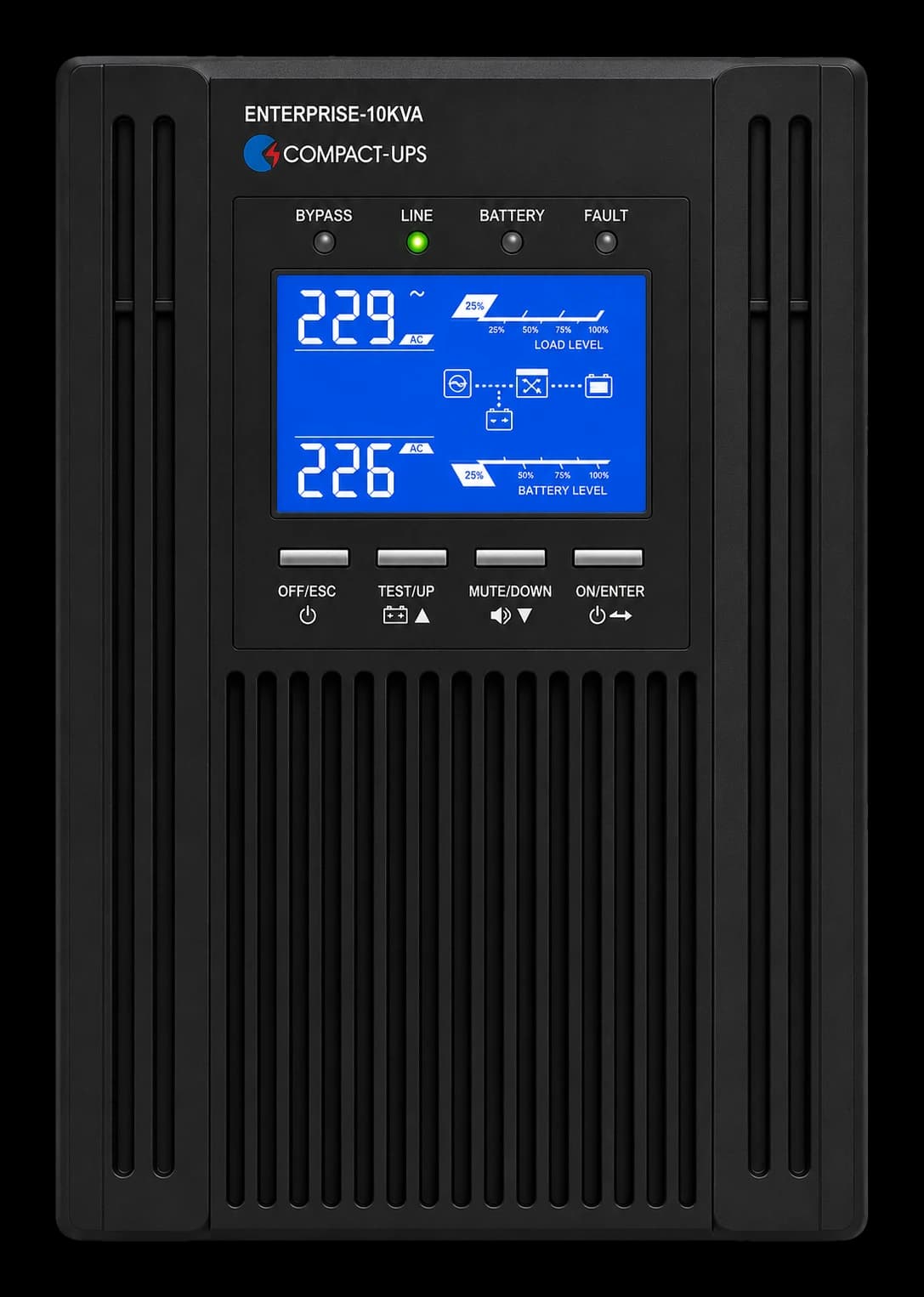
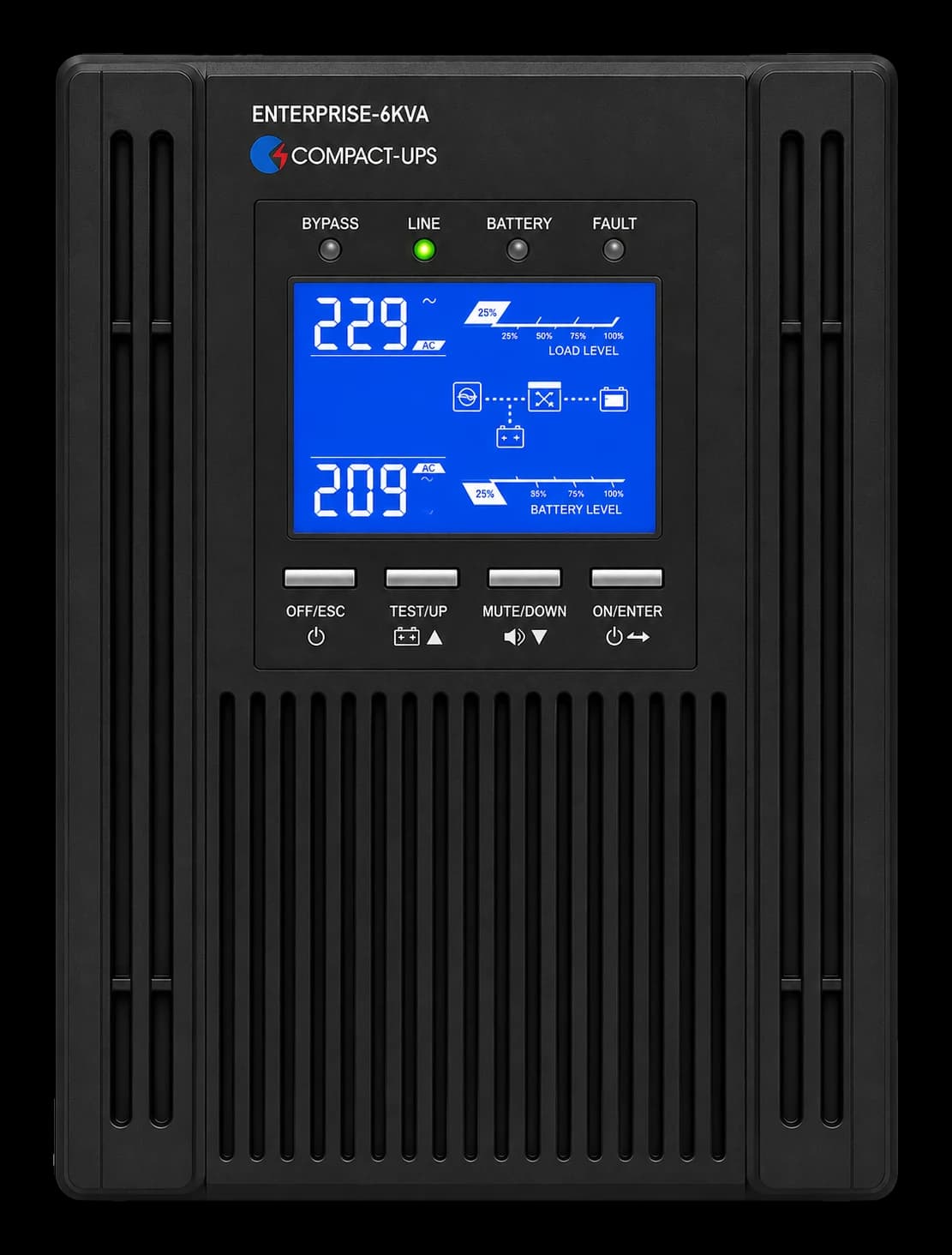
What it is
The Enterprise Series is COMPACT's intelligent on-line UPS platform, spanning 1 kVA to 20 kVA on a high-frequency IGBT design with a true double-conversion online topology. It is engineered to deliver clean, regulated power wherever the incoming supply cannot be trusted.
One architecture runs from a 1000 VA single-phase tower up to a 20 kVA three-phase-input system. A parallel option is available for high availability, and pan-India sales and service support stands behind every installation.
What it does
True double conversion online
Continuous regulated power regenerated through the rectifier and inverter — the load never sees the raw mains.
High-frequency IGBT design
Latest-generation IGBT technology for a compact footprint and AC-AC efficiency above 90%.
Wide input window
120–300 V AC input range depending on the connected load — fewer transfers to battery on a weak supply.
Low output distortion
Total harmonic distortion held below 3%; pure sine wave output with a 3:1 crest factor.
Parallel & hot-standby
Optional parallel and hot-standby configurations deliver redundancy where downtime is not acceptable.
32-bit microprocessor control
Automatic self-diagnosis for faster fault-finding; optional SNMP for remote monitoring and shutdown.
The engineering value
Conditioned power, not just backup
Because the inverter always runs, spikes, sags, noise and frequency drift on the input are regenerated out before they reach the load — not merely ridden through.
Efficiency that shows on the bill
AC-AC efficiency above 90% keeps running losses and heat down across the 1–20 kVA range.
Scales with the site
Start with a single tower and add a parallel unit later for capacity or redundancy without re-architecting the installation.
Where it fits
Typical applications for this range — not an exhaustive list.
- Servers, network closets and edge IT
- Retail, branch offices and commercial premises
- Medical and diagnostic devices
- Industrial automation and light manufacturing
- Digital printing and laser-cutting machines
- CCTV, access control and building systems
Inside the double-conversion path
Utility power passes through a PFC rectifier and an inverter stage that continuously regenerates a clean sine wave. A static bypass stands ready if the inverter is ever taken out of circuit.
On mains failure the DC bus is held up by the battery with a 0 ms transfer — the inverter output does not interrupt.
The rectifier and inverter run continuously, regenerating a clean output. The battery floats on the DC bus, held in reserve — current is always flowing to the load.
Model line-up
Real model designations and capacities transcribed from COMPACT's catalogue.
| Power band | Input phase | Nominal DC voltage |
|---|---|---|
| 1000 VA | Single-phase + ground | 36 V DC |
| 2000 / 3000 VA | Single-phase + ground | 72 / 96 V DC |
| 6000 VA | Single-phase + ground | 120 / 192 / 240 V DC |
| 11 / 15 / 20 kVA | Three-phase + ground | 192 / 240 / 384 V DC |
1000 VA
- Input phase
- Single-phase + ground
- Nominal DC voltage
- 36 V DC
2000 / 3000 VA
- Input phase
- Single-phase + ground
- Nominal DC voltage
- 72 / 96 V DC
6000 VA
- Input phase
- Single-phase + ground
- Nominal DC voltage
- 120 / 192 / 240 V DC
11 / 15 / 20 kVA
- Input phase
- Three-phase + ground
- Nominal DC voltage
- 192 / 240 / 384 V DC
Discrete 1, 2, 3, 6, 10, 11, 15 and 20 kVA ratings are available on this platform. The 11–20 kVA ratings take a three-phase (380 / 400 V ±20%) input while delivering a single-phase output.
Technical specification
Transcribed from COMPACT's product catalogue.
| Input | |
|---|---|
| Voltage range — 1000 / 2000 / 3000 VA | Load-based: 100–70% / 70–60% / 60–50% / 50–40% / 40–0% |
| Voltage range — 6000 VA | 170–270 V |
| Voltage range — 11 / 15 / 20 kVA | 380 / 400 V ± 20% |
| Line-low transfer — 2 / 3 / 6 kVA | 160 / 140 / 118 VAC |
| Frequency range | 46–54 Hz |
| Phase | Single-phase w/ ground (≤ 6 kVA); three-phase w/ ground (11–20 kVA) |
| Input power factor | > 0.95 (EN 61000-3-2) |
| Output | |
| Voltage | 220 VAC ± 1% |
| Voltage regulation | ± 1% |
| Frequency | 50 Hz ± 0.1% (46–54 Hz synchronised) |
| Distortion | ≤ 2% linear load / ≤ 3% non-linear load |
| Waveform / crest factor | Pure sine wave / 3:1 max |
| Efficiency (AC-AC) | > 90% |
| Power factor | 0.8–0.9, unity optional |
| Battery & charger | |
| Battery type | Sealed maintenance-free lead acid, or lead-acid tubular |
| Charger | Solid-state float-cum-boost, auto boost/trickle with current limiting |
| Transfer time | 0 ms |
| Charging time | 90% capacity after 8 hours |
| DC voltage | 36 V (1 kVA) · 72 / 96 V (2–3 kVA) · 120 / 192 / 240 V (6 kVA) · 192 / 240 / 384 V (11–20 kVA) |
| Display & interface | |
| Panel display | LED: load, battery status, alarm — or LCD: voltage, frequency, load, battery, alarm |
| Interface software | Power status, UPS shutdown, data logging, status monitoring, self-test |
| Communication | RS232 standard; SNMP interface & web-enabled RMIC interface optional |
| Environment & protection | |
| Noise level | < 45 dB (1 kVA) / < 50 dB (2–6 kVA) / < 55 dB (11–20 kVA), at 1 m |
| Temperature | 0–45 °C operating / -25–55 °C storage |
| Humidity / altitude | 0–95% / < 1500 m |
| Indications | Mains on, inverter on/off/faulty, battery level, static bypass on, load level |
| Protection | Electronic protection backed by MCB / MCCB / fast-acting fuse, high-speed pulse blanking, over/under-voltage |
| Bypass | Static bypass |
Input
- Voltage range — 1000 / 2000 / 3000 VA
- Load-based: 100–70% / 70–60% / 60–50% / 50–40% / 40–0%
- Voltage range — 6000 VA
- 170–270 V
- Voltage range — 11 / 15 / 20 kVA
- 380 / 400 V ± 20%
- Line-low transfer — 2 / 3 / 6 kVA
- 160 / 140 / 118 VAC
- Frequency range
- 46–54 Hz
- Phase
- Single-phase w/ ground (≤ 6 kVA); three-phase w/ ground (11–20 kVA)
- Input power factor
- > 0.95 (EN 61000-3-2)
Output
- Voltage
- 220 VAC ± 1%
- Voltage regulation
- ± 1%
- Frequency
- 50 Hz ± 0.1% (46–54 Hz synchronised)
- Distortion
- ≤ 2% linear load / ≤ 3% non-linear load
- Waveform / crest factor
- Pure sine wave / 3:1 max
- Efficiency (AC-AC)
- > 90%
- Power factor
- 0.8–0.9, unity optional
Battery & charger
- Battery type
- Sealed maintenance-free lead acid, or lead-acid tubular
- Charger
- Solid-state float-cum-boost, auto boost/trickle with current limiting
- Transfer time
- 0 ms
- Charging time
- 90% capacity after 8 hours
- DC voltage
- 36 V (1 kVA) · 72 / 96 V (2–3 kVA) · 120 / 192 / 240 V (6 kVA) · 192 / 240 / 384 V (11–20 kVA)
Display & interface
- Panel display
- LED: load, battery status, alarm — or LCD: voltage, frequency, load, battery, alarm
- Interface software
- Power status, UPS shutdown, data logging, status monitoring, self-test
- Communication
- RS232 standard; SNMP interface & web-enabled RMIC interface optional
Environment & protection
- Noise level
- < 45 dB (1 kVA) / < 50 dB (2–6 kVA) / < 55 dB (11–20 kVA), at 1 m
- Temperature
- 0–45 °C operating / -25–55 °C storage
- Humidity / altitude
- 0–95% / < 1500 m
- Indications
- Mains on, inverter on/off/faulty, battery level, static bypass on, load level
- Protection
- Electronic protection backed by MCB / MCCB / fast-acting fuse, high-speed pulse blanking, over/under-voltage
- Bypass
- Static bypass
Consider alongside
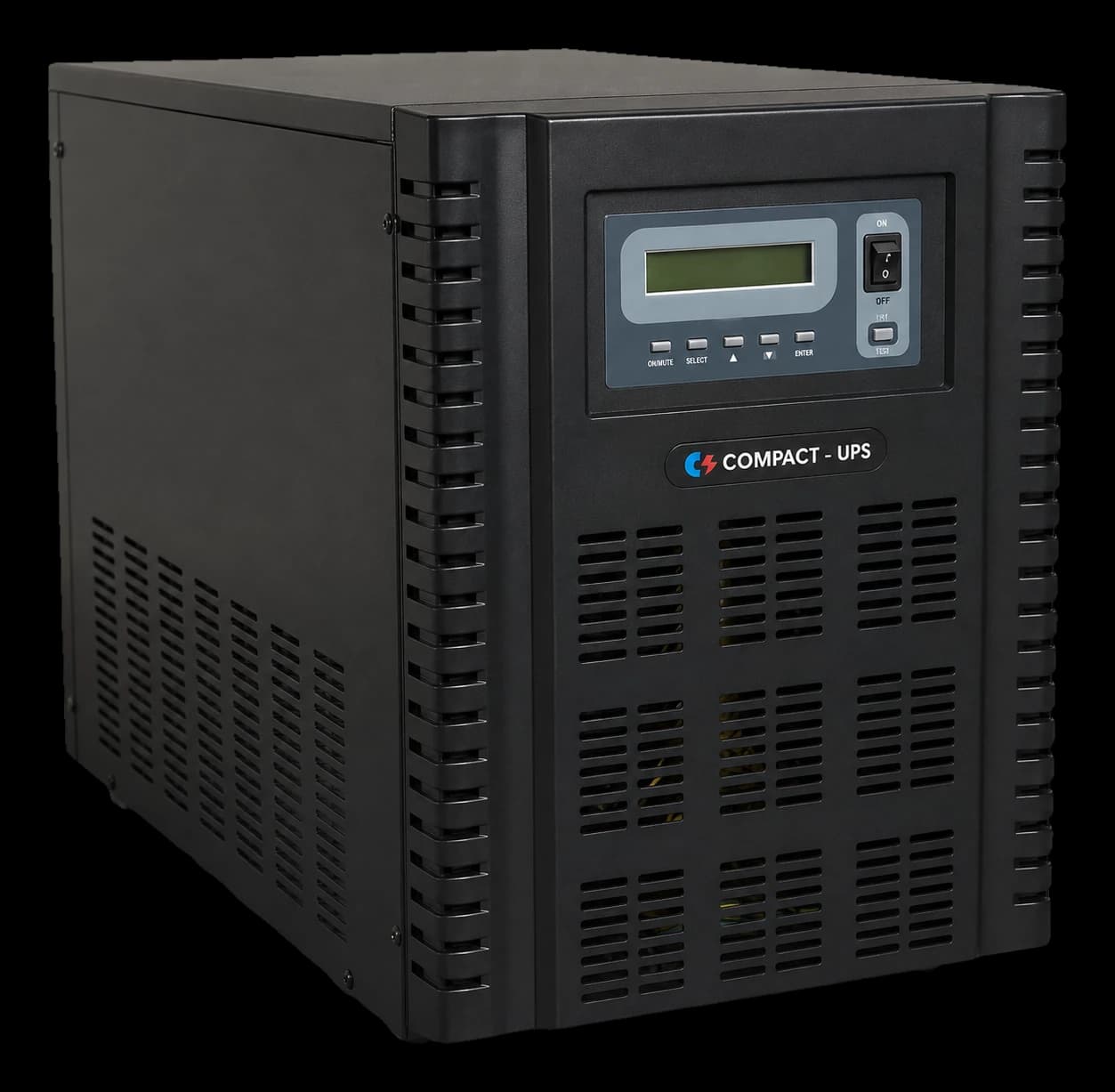 5–20 kVA
Enterprise T-Series
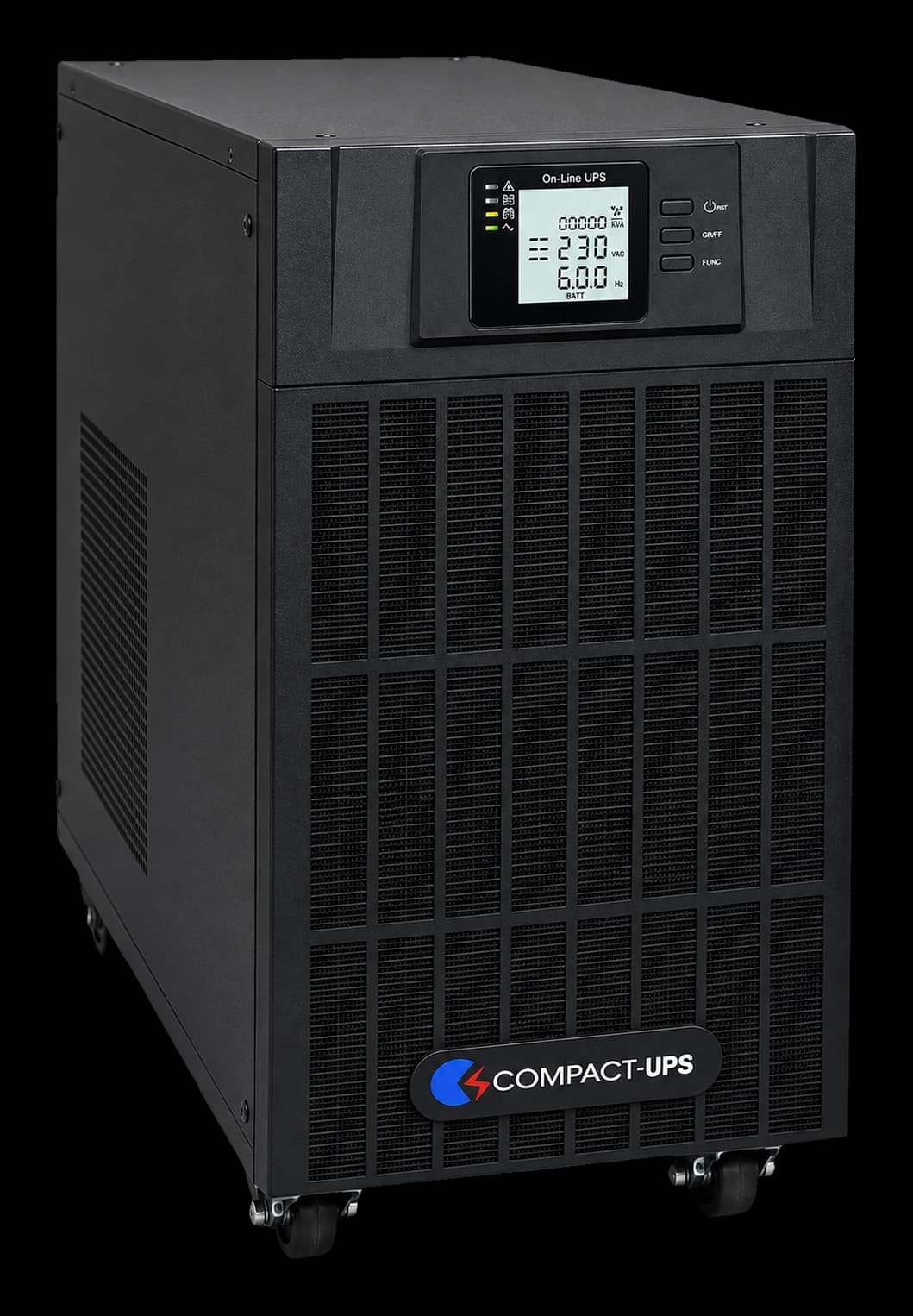
Transformer-based online UPS — a physical barrier between volatile input and sensitive, expensive load.
 10–80 kVA
Enterprise YD Series
Vertical-modular, DSP-controlled three-phase online UPS engineered for data-centre-grade RAS.
Batteries
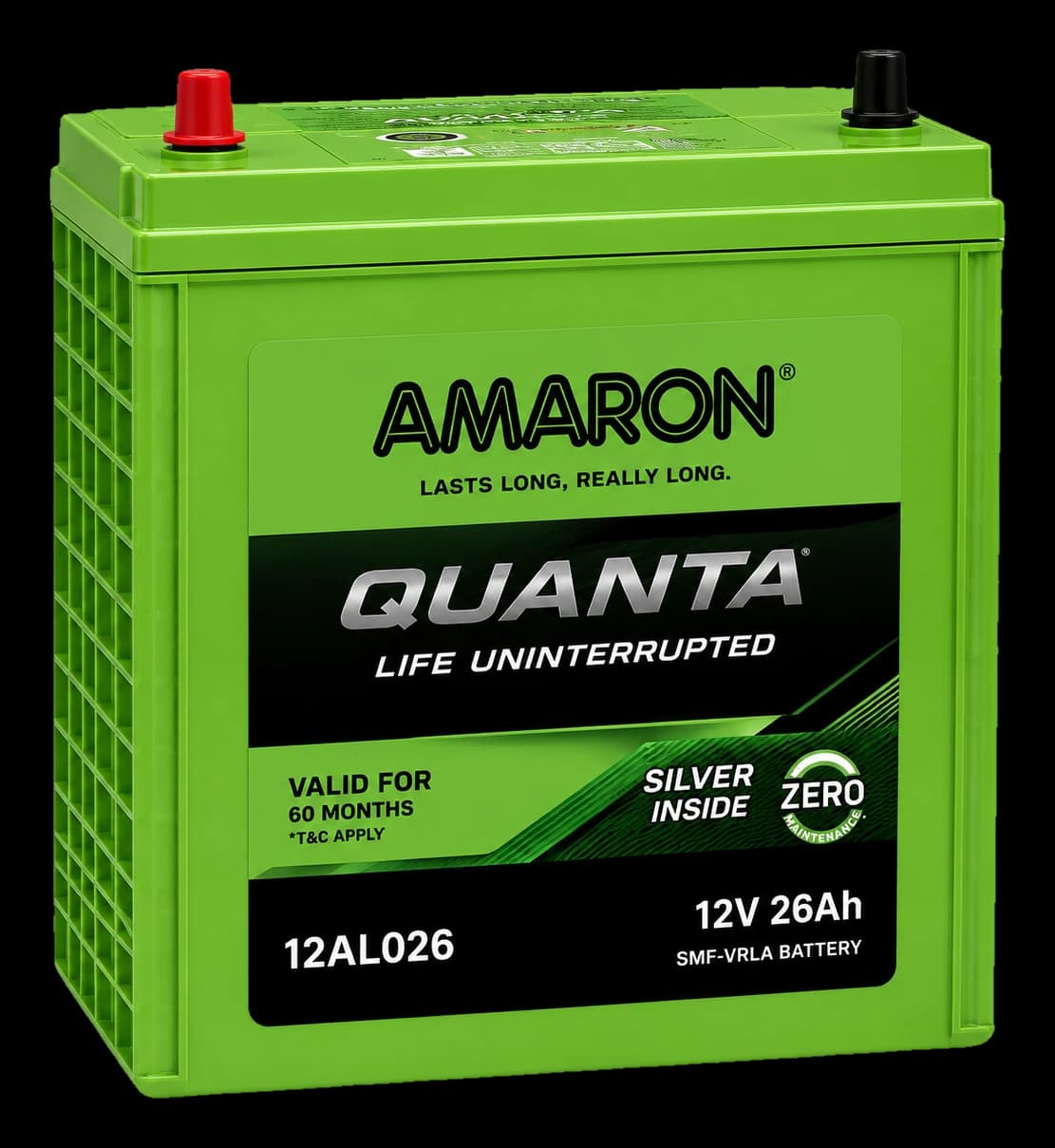
SMF, tubular and lithium-ion battery banks, sized and maintained to your backup requirement.
Talk to us to uncover the hidden problems
Tell us the load, the site and the supply. COMPACT's pre-sales team will confirm whether Enterprise is the right fit — and flag anything else the site needs that a spec sheet alone would miss.